
Beyond Blue Highways
What happens when women who read too much take a road trip.

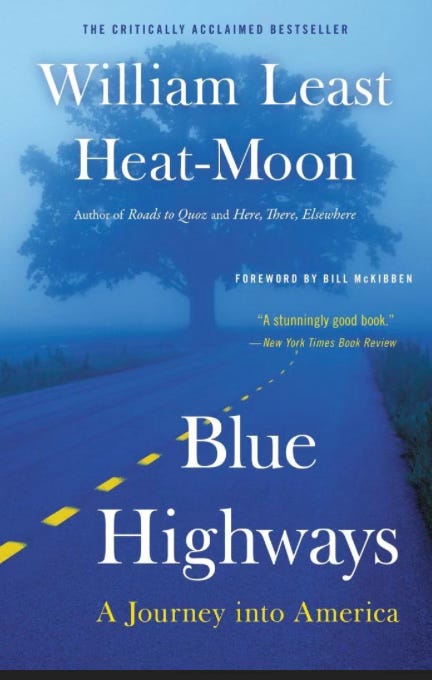
I’ve been on a yearlong working sabbatical that culminated in a five-month road trip around the United States with my wife, Lisa, in our camper van. Because we finally really needed to get where we were going, the last month of that journey involved much more concentrated driving time than the previous four, a situation that called for audiobooks. After enjoying Sarah Vowell’s Assassination Vacation (her account of obsessively hunting down all the local history sites across America devoted to remembering our nation’s murdered presidents and the men who killed them), we eventually downloaded William Least Heat-Moon’s Blue Highways, a narrative about the author’s 1978 journey around the U.S. in a Ford Econoline van, taking only back roads—those printed in blue ink in the paper atlases people used to navigate by. The book’s 18-hour listening time made it seem like a good investment, especially since his story begins in the southeast along a route we had recently completed ourselves, albeit in reverse direction from his own.
*
Blue Highways was a popular book when it was published in 1982, and I remember my parents owning a copy. I also remembered that its author came under suspicion for claiming a Native American ancestry he may not have been entitled to and name he may have invented (his real last name was Hodgson). This detail, combined with the fact that he named his van “Ghost Dancing” and cited Black Elk as if he were a combination guru and family acquaintance, irritated me, but I decided to give him the benefit of the doubt. We found ourselves initially engaged and fairly well entertained by his encounters and conversations with people who lived in what used to be towns along roads no one traveled anymore. It’s hard to say at exactly which hour our patience began to run out and what collection of circumstances in his story wore us down. But a lot of it had to do with breasts.
*
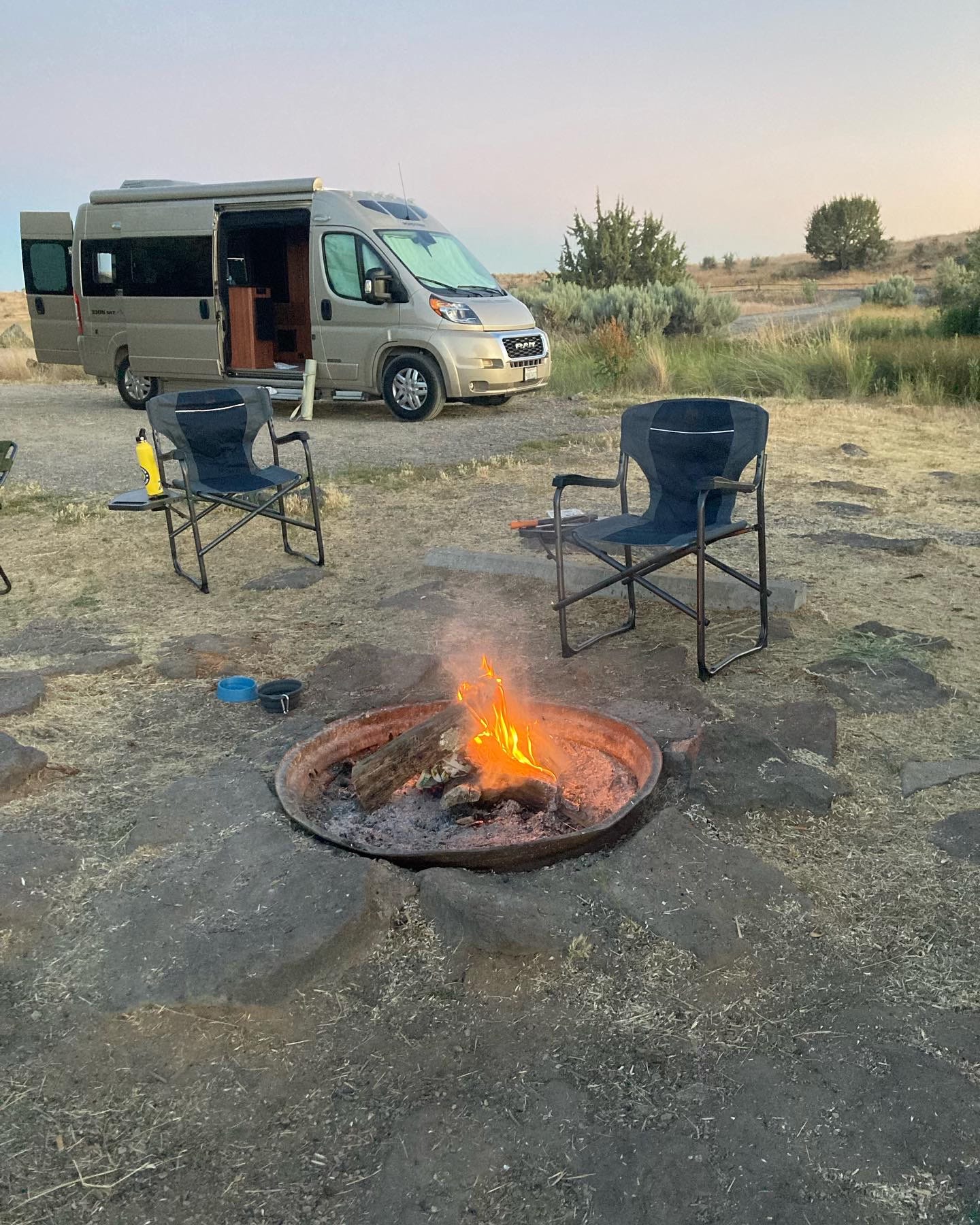
Our camper van is a Road Trek Zion, built on a Dodge Ram Promaster chassis. Writing that sentence down makes me feel like a weightlifter who has a grease cloth stuffed into her back pocket and who owns more than one set of socket wrenches. I kind of like the illusion but, in truth, I’m more of a smallish book nerd in almost constant need of an updated eyeglass prescription. In fact, Lisa and I named our van Charley, after John Steinbeck’s Travels with Charley, his 1962 narrative about traveling around the U.S. in a modified truck with his dog, a standard poodle named Charley. We carry a used mass market paperback of the book—the kind so old its yellowed pages threaten to crack if mishandled—at the bottom of the van’s closet, along with a lantern and a broom and several bottles of sunscreen.
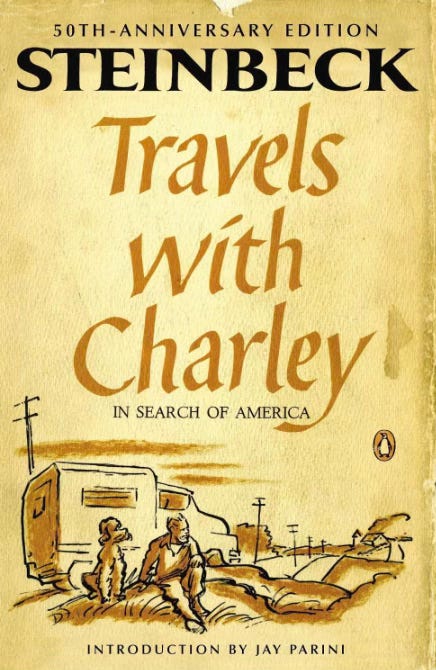
I first read the book in my youth, when most people read Steinbeck novels, and with the encouragement of my father, who praised the book, just as he also praised Blue Highways. That’s probably also how I ended up as a high schooler in the 1970s reading Jack Kerouac’s On the Road, and then Robert Pirsig’s Zen and the Art of Motorcycle Maintenance, all books that filled me with a desire to be footloose and fancy free, to travel with no clear itinerary or destination across the U.S., open to the kind of spontaneous madcap adventure and deep personal growth that invariably ensue. In truth, Steinbeck was already a successful and decorated writer and an older man when he undertook his trip (he would be dead six years after the book was published), and I hadn’t realized until our more recent re-reading how much time in it he spends complaining, mostly about how things aren’t the way they used to be. He has a rant about vending machines and another, somewhat more ambiguous rant, about mobile homes, and he grows weary of being on the road.
*
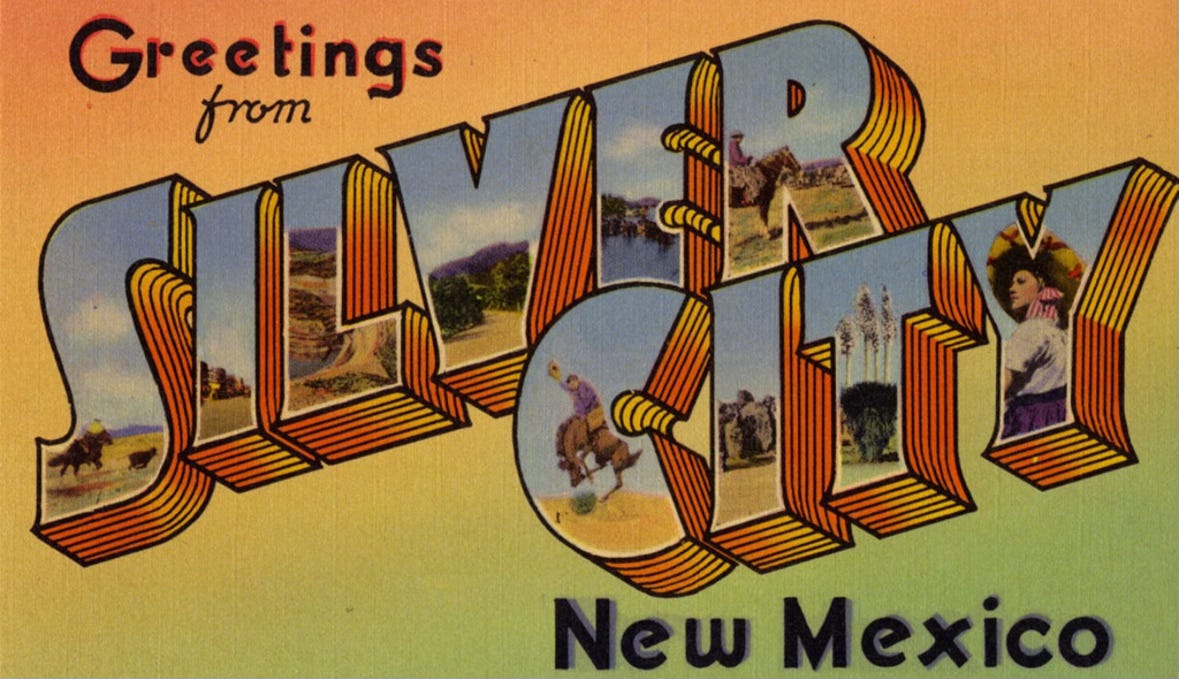
Blue Highways was suggested to us by the owner of a used bookstore in Silver City, New Mexico, where we spontaneously stopped earlier in our trip. The store was closed when we walked up to it, and while we were deciding what to do, an old truck drove up to park at the curb and an older man emerged, carrying keys to the store. He spoke with an Irish accent and greeted us with the exclamation, “Oh, I love women!” He gave us a tour of the store vigorously accompanied by reading recommendations, and asked us where we were from and where we were going. On our way out, he asked for a photo on the front sidewalk. That’s when another, somewhat less old man walked by, stopped, looked at us and then at the Irish store owner. They clearly knew each other. The new man looked back at us and said “Are you actually talking to this guy?” Before we could answer, the Irish bookseller announced “They’re from Maine!” (We are not from Maine, neither one of us, not even close, but by then it was too exhausting to correct him.)
Before we left, he gave us one last reading recommendation: “Have you read Blue Highways? It’s the best road trip book there is.” Retrospectively speaking, this was a clue.
*
William Least Heat-Moon embarks on his road trip because his wife is leaving him and he doesn’t have a job. He wears suspenders, a detail he reminds us of more than once. At one point during the journey—I think he’s in Vermont at the time—he becomes so lonely and remorseful that he calls her, hoping to remedy things, but the call clearly makes it worse. By this point, Lisa and I were both irritated to the core by this man who had fused into the unfortunate audiobook narrator who voiced his endless narrative. Much like Steinbeck, Bill spent an inordinate amount of time complaining about how the world was changing, in the same attitude of nostalgic despair that led him to avoid the speedy interstates and their roadside conveniences to begin with. But he, the man who wore suspenders, also routinely characterized the people he met in the bars and cafes of the back roads as lovable buffoons or out-of-touch relics or discardable cranks.
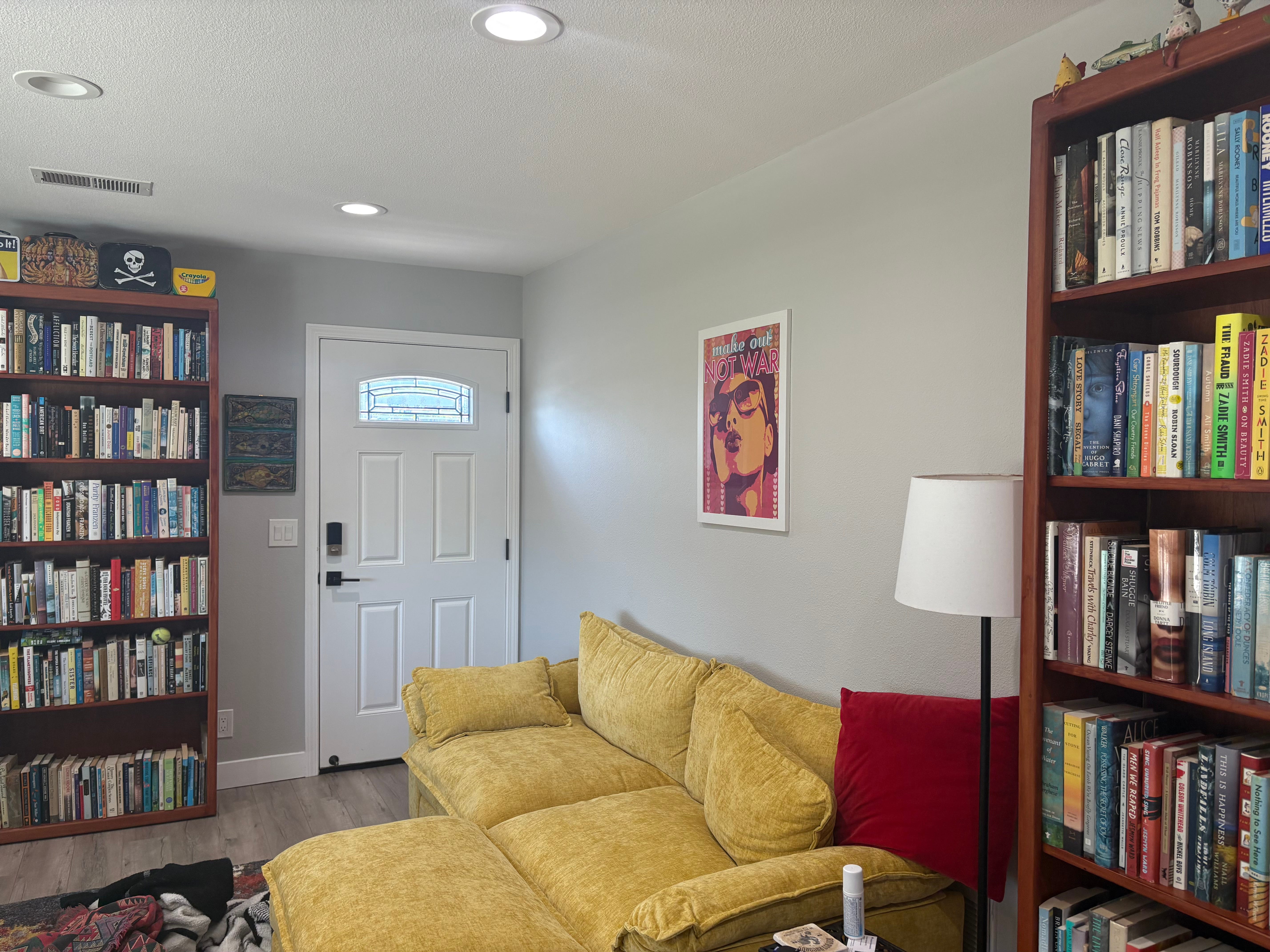
His physical descriptions of their bodies bordered on insults he seemed to think were clever, and he never described a single woman without commenting on the size or shape of her breasts. The latter habit became so predictable that Lisa and I held our breath in anticipation when a woman entered the story. “Wait for it,” we’d proclaim, until “There it is!”—a description of just how droopy or perky was her chest or how obscured was his vision of the bar’s back room by the amplitude of her bosom. We just couldn’t imagine why in the world this guy was getting divorced, and after enduring so very many hours of his narration, we wished for an audiobook divorce from him ourselves. We saw it through, however, and finally finished the last hour of the book once we made it home, playing the book’s final chapters on a portable speaker as we unboxed our book collection and shelved it in our new living room. Lisa and I talked, mostly about our books, as the narrator droned one, and neither one of us could tell you much about what he had to say in the last hours of his story.
*
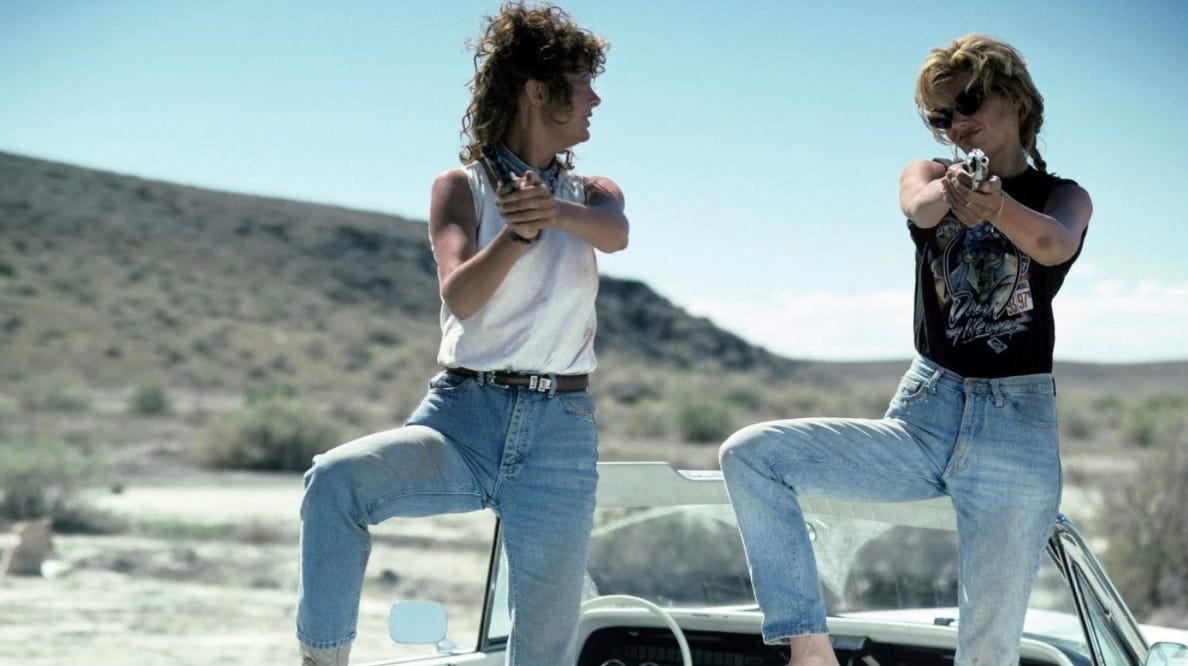
If pressed to name a road trip narrative by and about a woman, the only one I can come up with is Thelma and Louise. It’s my favorite film but it ends with the two women driving off a cliff to their deaths as the frame freezes on Harvey Keitel running uselessly toward their car as if he could stop them.
Please, I beg of you, send me recommended titles of road trip books by women, preferably ones in which they don’t die.